
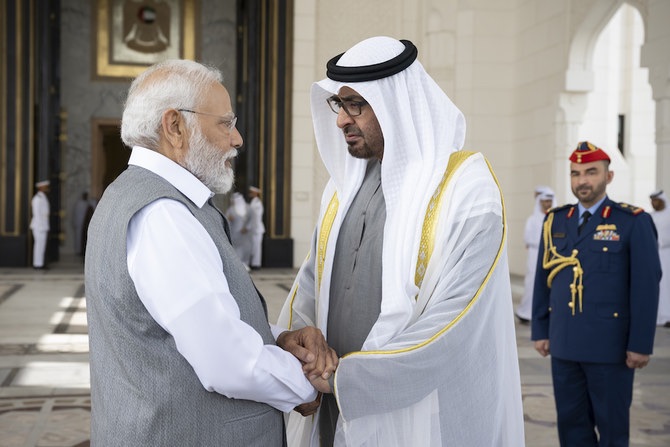
In a major boost to India-UAE economic ties, the United Arab Emirates has announced a massive $5 billion investment package focused on Indian infrastructure projects, RBL Bank, and Sammaan Capital during Prime Minister Narendra Modi’s high-profile visit to Abu Dhabi.
The announcement comes at a crucial time as India pushes aggressive infrastructure expansion while global investors increasingly view the country as one of the world’s fastest-growing strategic markets.
India-UAE Partnership Moves Beyond Oil
The investment commitment was unveiled alongside a series of defence, energy, and logistics agreements signed between India and the UAE. The two nations also finalized deals involving strategic petroleum reserves, long-term LPG supply arrangements, and a new ship repair cluster project in Vadinar, Gujarat.
Analysts say the latest move signals how the India-UAE relationship is rapidly evolving from a traditional oil-trade partnership into a broader geopolitical and financial alliance.
The UAE is already among India’s top trading partners, and bilateral trade surged after the Comprehensive Economic Partnership Agreement (CEPA) came into force in 2022. Both countries are now targeting trade volumes of nearly $200 billion in the coming years.
Why RBL Bank and Sammaan Capital Matter
The inclusion of RBL Bank and Sammaan Capital in the investment package has sparked fresh interest across India’s financial sector.
RBL Bank has recently been in focus following strategic developments involving UAE-based banking giant Emirates NBD, which previously announced plans to acquire a major stake in the Indian lender.
Meanwhile, Sammaan Capital — formerly known as Indiabulls Housing Finance — remains an important player in India’s housing finance market, a sector expected to grow rapidly as urbanization and affordable housing demand continue to rise.
The UAE’s backing could improve liquidity access, lending capacity, and long-term infrastructure financing opportunities across multiple sectors.
Geopolitics Driving Economic Deals
The timing of the deal is especially significant amid rising tensions in West Asia and concerns surrounding global energy routes such as the Strait of Hormuz.
During talks with UAE President Mohamed bin Zayed Al Nahyan, PM Modi emphasized regional stability, secure trade corridors, and deeper strategic cooperation.
India’s growing alignment with Gulf economies is increasingly being viewed as part of a larger geopolitical strategy aimed at:
- securing long-term energy supplies,
- attracting sovereign capital,
- expanding defence cooperation,
- and reducing economic exposure to Western market volatility.
Global Investors Continue India Push
The announcement adds to a broader trend of Gulf sovereign wealth funds aggressively increasing exposure to India’s economy, particularly in:
- infrastructure,
- fintech,
- AI-enabled financial services,
- logistics,
- renewable energy,
- and digital banking.
With India projected to remain one of the fastest-growing major economies in 2026, global investors are racing to secure long-term positions in the country’s financial and industrial expansion story.
For the UAE, the move also strengthens its role as a strategic capital partner in Asia at a time when global investment flows are shifting toward emerging markets.


