India, Major Oil Importers May Negotiate Direct Transit Corridors With Iran Amid Hormuz Risks: Moody’s

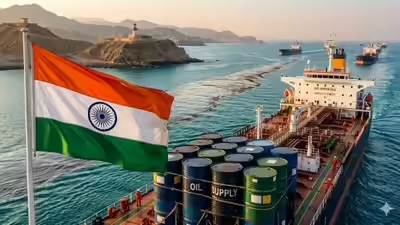
India and other major oil-importing countries may move toward bilateral negotiations with Iran to secure dedicated transit corridors for energy shipments amid growing instability in the Strait of Hormuz, according to Moody’s Analytics.
The development highlights rising global concern over disruptions in one of the world’s most strategically important oil shipping routes.
Why the Strait of Hormuz Matters
The Strait of Hormuz handles a massive share of global crude oil and LNG shipments, making it one of the most critical energy chokepoints in the world.
India remains heavily dependent on imported crude oil, with a large portion of shipments passing through the Gulf region. Energy analysts warn that any prolonged disruption could:
- spike oil prices,
- weaken the Indian rupee,
- increase inflation,
- and pressure India’s trade balance.
What Moody’s Is Suggesting
According to Moody’s, countries highly dependent on Gulf energy supplies may increasingly pursue:
- direct bilateral energy arrangements,
- secured shipping corridors,
- diplomatic transit guarantees,
- and long-term logistical agreements with Iran.
The goal would be to reduce uncertainty for oil cargo movement if geopolitical tensions escalate further around the region.
India’s Energy Security Strategy Expanding
India has already accelerated efforts to strengthen energy security through:
- strategic petroleum reserves,
- long-term LNG contracts,
- diversified crude sourcing,
- and expanded Gulf partnerships.
Recent agreements with the UAE involving strategic oil reserves and LPG supplies reflect India’s broader push to shield itself from global supply shocks.
The country has also increased maritime monitoring and energy supply contingency planning amid ongoing instability in West Asia.
Geopolitics Reshaping Global Energy Trade
The report reflects a wider transformation in global energy logistics.
As geopolitical tensions rise, countries are increasingly prioritizing:
- secure shipping lanes,
- politically reliable suppliers,
- strategic reserves,
- and protected energy corridors.
Analysts say future energy trade may become more fragmented and geopolitically negotiated rather than purely market-driven.
For India, maintaining uninterrupted oil flows remains crucial as the country continues to be one of the world’s fastest-growing energy consumers.
Markets Watching Closely
Global investors and commodity markets are closely monitoring developments around the Gulf region because even temporary disruptions in the Strait of Hormuz can rapidly impact:
- crude oil prices,
- shipping insurance costs,
- inflation,
- and global supply chains.
Energy security is now emerging as one of the biggest geopolitical and economic themes shaping 2026.