
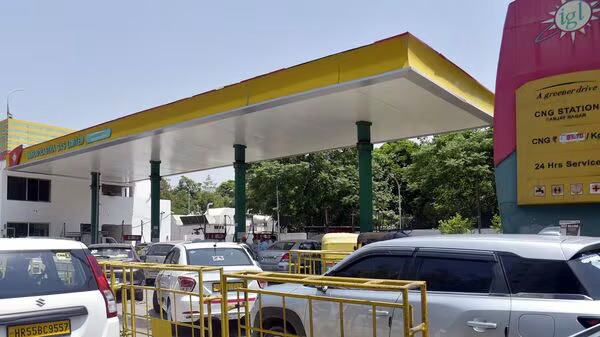
Residents of Delhi and several cities across Northern India woke up to another increase in Compressed Natural Gas (CNG) prices on Sunday, with rates hiked by ₹1 per kilogram.
The latest increase marks the second CNG price hike within 48 hours, intensifying concerns over rising fuel expenses and inflationary pressure on transportation and daily living costs.
New CNG Prices Take Effect
The revised prices came into effect starting May 17, 2026, impacting:
- private vehicle owners,
- auto-rickshaw drivers,
- taxi operators,
- commercial transport services,
- and public mobility networks heavily dependent on CNG.
Delhi, along with nearby NCR cities and multiple northern states, witnessed the latest revision.
Why CNG Prices Are Rising
The price hike comes amid:
- elevated global energy prices,
- increased natural gas procurement costs,
- geopolitical instability in energy-producing regions,
- and pressure on imported fuel supplies.
India imports a significant portion of its energy requirements, making domestic fuel prices sensitive to international market fluctuations.
Analysts say ongoing tensions around key global oil and gas transit routes are continuing to affect fuel pricing across Asia.
Impact on Consumers and Transport Sector
The repeated hikes are expected to directly impact:
- daily commuting expenses,
- public transportation fares,
- logistics costs,
- and food delivery operations.
Auto and cab drivers have increasingly voiced concerns over shrinking earnings as fuel costs continue rising while platform commissions and maintenance expenses remain high.
Experts warn that sustained fuel inflation could eventually contribute to:
- higher delivery charges,
- increased transportation costs,
- and broader inflationary pressure across urban economies.
Energy Security Becoming a Major Issue
India has recently accelerated efforts to strengthen long-term energy security through:
- strategic oil reserves,
- LNG agreements,
- international energy partnerships,
- and diversified import sourcing.
The government has also been closely monitoring global developments around:
- the Strait of Hormuz,
- Middle East tensions,
- and natural gas supply chains.
Recent reports suggest India and other major energy importers may even pursue direct transit agreements with regional players to reduce future supply risks.
Inflation Concerns Return
The latest CNG hikes may also increase concerns over urban inflation, especially in sectors heavily dependent on fuel-based transportation.
Economists say fuel price movements remain one of the biggest drivers of:
- transportation inflation,
- food logistics costs,
- and service sector pricing.
With global energy markets remaining volatile, further fuel price adjustments cannot be ruled out in the coming weeks.


