
India’s Chandrayaan-2 May Have Identified Major Buried Ice Zone Near Moon’s South Pole

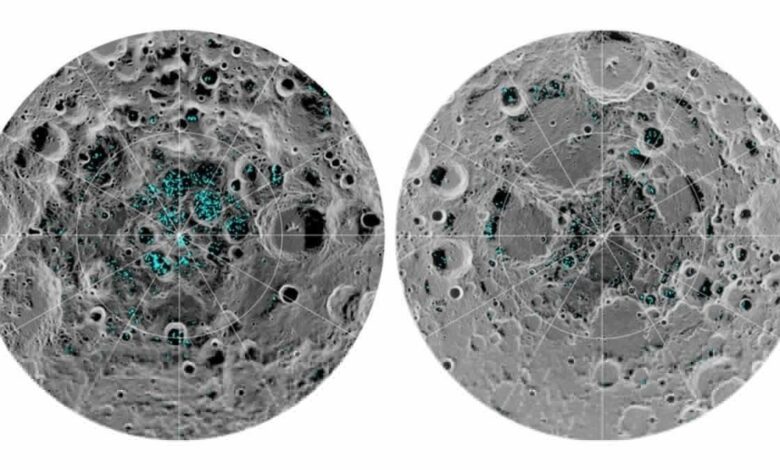
Indian Space Research Organisation’s Chandrayaan-2 mission may have identified one of the most significant buried water-ice deposits ever detected on the Moon, according to emerging scientific analysis tied to radar observations near the lunar south pole.
The findings reportedly point to a roughly 1.1-kilometer subsurface zone inside the Faustini crater region, beneath permanently shadowed craters that have remained untouched by sunlight for billions of years.
Scientists believe temperatures in these areas can fall below minus 200 degrees Celsius, creating conditions capable of preserving ancient ice from early cometary impacts dating back to the formation of the solar system.
Why Lunar Water Changes Everything
The discovery is attracting global attention not simply because of its scientific importance, but because water on the Moon is considered one of the most strategically valuable resources in space exploration.
Water can potentially be converted through electrolysis into:
- Oxygen for breathable air
- Hydrogen for rocket fuel
- Life-support systems for long-term habitats
This means lunar water could dramatically reduce the need to transport massive supplies from Earth, one of the biggest obstacles preventing permanent human presence on the Moon.
Experts often describe lunar water as the key resource required to transform Moon bases from temporary missions into sustainable settlements.
Moon’s South Pole Becoming Global Strategic Target
The Moon’s south pole has already become the center of growing international competition because scientists believe permanently shadowed craters there contain substantial frozen water reserves.
Multiple global powers are now targeting the same region, including:
- NASA through the Artemis program
- China’s proposed lunar base roadmap
- Private aerospace companies pursuing commercial lunar missions
India’s Chandrayaan missions have significantly increased the country’s importance in this emerging lunar race.
From Science Mission to Resource Competition
Analysts say the implications extend far beyond planetary science.
A functioning lunar water extraction system could support:
- Permanent Moon bases
- Deep-space missions
- Fuel depots for Mars exploration
- Strategic space infrastructure
Because launching resources from Earth remains extremely expensive, any nation capable of producing fuel and life-support systems directly on the Moon could gain a major long-term advantage in space operations.
Legal Questions Could Become Major Global Issue
The discovery is also reigniting debate over one of the biggest unresolved issues in space law: who owns extraterrestrial resources?
The Outer Space Treaty prohibits countries from claiming sovereignty over celestial bodies such as the Moon.
However, the treaty was written decades before modern plans for commercial mining, lunar industry, and permanent space infrastructure became realistic possibilities.
Legal experts note that while nations cannot officially “own” the Moon itself, international law remains far less clear regarding:
- Resource extraction rights
- Mining zones
- Commercial utilization
- Territorial operational control
This ambiguity could eventually create geopolitical disputes as countries and corporations move closer to actual lunar resource extraction.
India’s Growing Space Influence
India’s lunar achievements have significantly elevated its standing in the global space sector over recent years.
Following the success of:
- Chandrayaan-3
- Lunar south pole exploration efforts
- Cost-efficient mission engineering
India is increasingly viewed as one of the world’s leading emerging space powers.
The latest findings could further strengthen India’s role in future international lunar exploration partnerships and strategic space negotiations.
The Beginning of a New Space Economy?
Experts believe discoveries involving lunar water could eventually help trigger an entirely new economic era centered around:
- Space mining
- Lunar infrastructure
- Off-world fuel production
- Deep-space logistics
For decades, the Moon was viewed primarily as a scientific destination.
Now, it is increasingly being viewed as a future strategic resource frontier.
If confirmed and commercially accessible, buried ice near the lunar south pole may become one of the most contested and economically important resources humanity has ever discovered beyond Earth.


