
Security Expert Warns AI Could Potentially Reconstruct Fingerprints From Camera Images

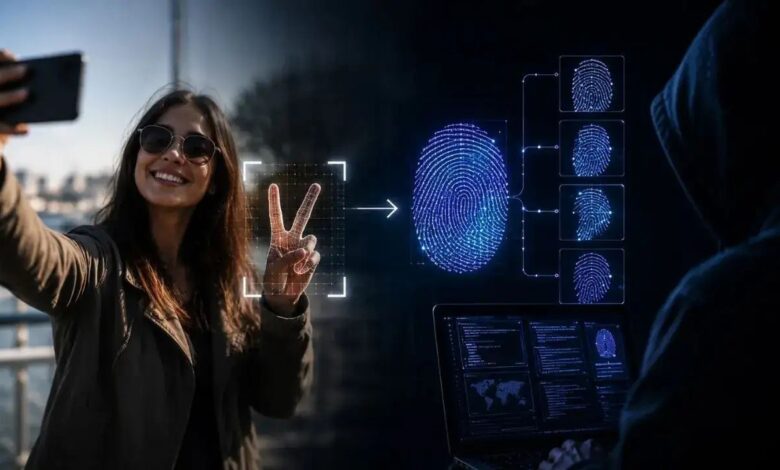
Artificial intelligence is creating new cybersecurity concerns after security expert Li Chang warned that AI-powered hackers could potentially reconstruct fingerprints from high-resolution camera images if a person’s fingers are visible within approximately 1.5 meters of a camera lens.
The warning highlights growing fears around the misuse of advanced AI image enhancement technologies and biometric data theft.
According to cybersecurity researchers, modern AI systems are becoming increasingly capable of enhancing blurry images, extracting fine details, and reconstructing patterns that were previously impossible to capture clearly from ordinary photos or videos.
Why Fingerprints Matter
Fingerprints are one of the world’s most widely used biometric authentication methods and are commonly used for:
- Smartphone unlocking
- Banking verification
- Identity systems
- Border control
- Workplace access systems
- Digital payment authentication
Unlike passwords, fingerprints cannot easily be changed if compromised, making biometric theft particularly serious.
Researchers warn that if attackers successfully reconstruct fingerprint patterns from public photos or videos, the data could theoretically be misused for identity fraud, device spoofing, or unauthorized biometric authentication attempts.
AI Image Enhancement Raising New Risks
Recent advances in AI-powered image processing have dramatically improved:
- Super-resolution enhancement
- Detail reconstruction
- Facial recognition
- Object identification
- Pattern extraction
Security experts say these tools can sometimes recover details from low-quality or distant images that humans cannot easily detect with the naked eye.
The rise of ultra-high-resolution smartphone cameras and social media content sharing has also increased the amount of publicly available visual biometric data online.
Experts Urge Caution, Not Panic
Cybersecurity analysts caution that while the threat is technically plausible, real-world exploitation remains highly complex and would likely require:
- Extremely high-quality image capture
- Favorable lighting conditions
- Specific camera angles
- Advanced AI processing
- Sophisticated spoofing methods
Many modern biometric systems also use liveness detection and multi-layer authentication protections designed to prevent fake fingerprint attacks.
Still, researchers say the warning demonstrates how rapidly advancing AI capabilities are creating entirely new privacy and cybersecurity challenges.
Growing Debate Around Biometric Privacy
The discussion is part of a broader global debate surrounding biometric security and AI surveillance technologies.
Governments and technology companies worldwide are increasingly facing pressure to strengthen regulations around:
- Facial recognition systems
- Biometric databases
- AI surveillance tools
- Personal data collection
- Digital identity systems
Privacy advocates argue that biometric information should receive stronger legal protections because, unlike passwords, biological identifiers are permanent.
As AI image-generation and enhancement technologies continue evolving, experts believe concerns around biometric privacy will likely become one of the most important cybersecurity discussions of the next decade.