
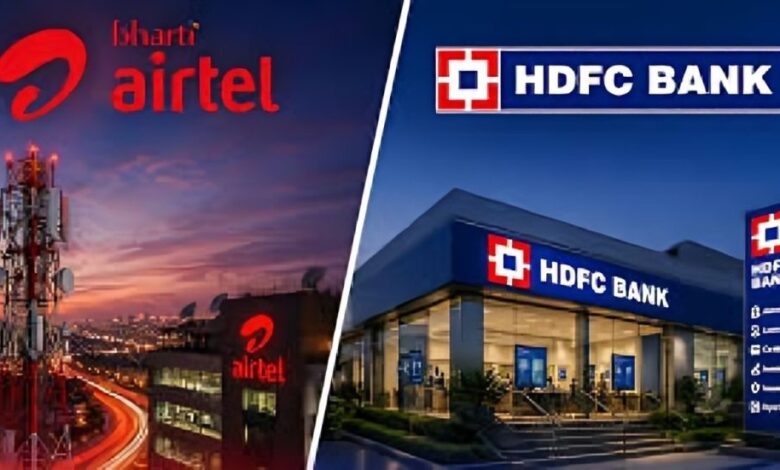
Bharti Airtel has officially overtaken HDFC Bank in market capitalization, becoming the second most valuable listed company in India.
The milestone reflects the growing investor confidence in India’s telecom and digital infrastructure sector as demand for mobile data, broadband services, and 5G connectivity continues rising rapidly across the country.
Bharti Airtel’s market valuation surged following sustained growth in subscriber revenue, premium customer additions, expanding average revenue per user (ARPU), and aggressive network investments.
The company now stands behind only Reliance Industries in overall market capitalization among Indian listed firms.
Telecom Sector Driving Investor Optimism
Analysts say Airtel’s rise highlights how telecom infrastructure has become increasingly central to India’s digital economy.
Over the past few years, the company has significantly strengthened its position in:
- 5G network rollout
- Enterprise digital services
- Data center operations
- Fiber broadband expansion
- International connectivity
- Digital payments and cloud solutions
The rapid adoption of high-speed internet and growing smartphone penetration in India have further accelerated telecom sector growth.
Investors have also reacted positively to improving profitability metrics and stronger cash flow generation within the telecom industry after years of intense price competition.
Pressure on Banking Sector Valuations
While HDFC Bank remains one of India’s largest and strongest private banks, banking sector valuations have recently faced pressure from tighter margins, regulatory concerns, rising competition, and broader market rotation toward technology and infrastructure-focused companies.
Market analysts note that Airtel’s valuation surge reflects a broader shift where digital connectivity companies are increasingly being viewed as long-term infrastructure assets similar to utilities or technology platforms.
The company’s strong performance has also been supported by optimism surrounding India’s expanding digital economy and future AI-driven data demand.
India’s Digital Economy Expansion
India is currently one of the world’s fastest-growing internet markets, with hundreds of millions of users consuming increasing amounts of mobile data, streaming services, cloud applications, and digital financial products.
Telecom companies like Airtel are expected to play a critical role in enabling:
- AI infrastructure growth
- Smart city development
- Enterprise digitization
- IoT expansion
- Cloud computing adoption
- Rural internet penetration
Analysts believe the telecom sector could continue attracting strong investor attention as India accelerates toward becoming a major global digital economy.
Bharti Airtel’s rise to the number two position marks a major symbolic shift in Indian markets, signaling how technology, connectivity, and digital infrastructure are becoming increasingly dominant forces in the country’s economic future.