
Flipkart Partners With India Post to Expand E-Commerce Reach Across Smaller Towns and Rural India

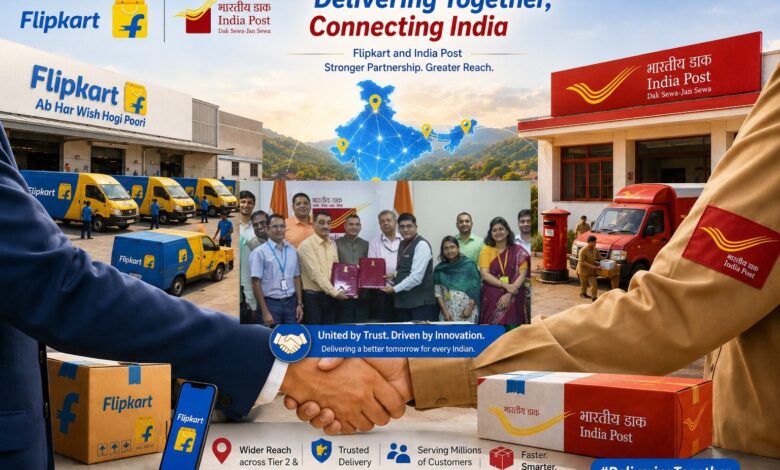
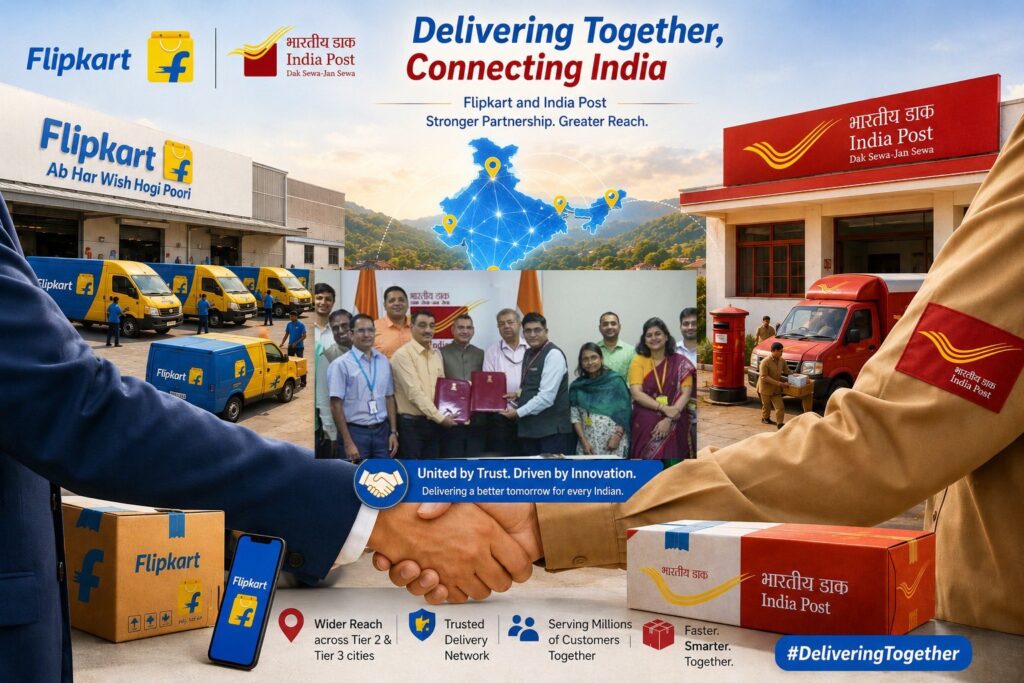
Flipkart has announced a major partnership with India Post aimed at strengthening e-commerce access across smaller towns, semi-urban areas, and underserved regions in India.
The collaboration combines Flipkart’s technology-driven commerce and logistics infrastructure with India Post’s extensive nationwide postal network consisting of more than 150,000 post offices.
The partnership is expected to create one of the largest commerce access networks in the country.
Expanding E-Commerce Beyond Major Cities
The initiative is designed to improve delivery reach and digital commerce penetration in regions where private logistics infrastructure remains limited.
Officials say the partnership could help:
- Improve last-mile delivery
- Expand online shopping access
- Strengthen rural commerce networks
- Increase logistics efficiency
- Support small-town consumers and sellers
India’s e-commerce sector has grown rapidly over the past decade, but delivery and logistics challenges still remain significant in many remote and rural regions.
India Post’s Massive Reach Key to Collaboration
India Post operates one of the world’s largest postal networks, with post offices spread across villages, towns, and remote locations throughout the country.
The collaboration allows Flipkart to leverage:
- Rural postal infrastructure
- Deep geographic reach
- Existing delivery systems
- Trusted local networks
Experts say India Post’s presence in hard-to-reach regions gives the partnership a major strategic advantage in expanding e-commerce accessibility.
Boost for Digital Commerce and Rural Economy
Analysts believe the partnership could help accelerate India’s broader digital economy goals by bringing more consumers and sellers into online commerce ecosystems.
Potential benefits include:
- Faster product deliveries
- Better access to online marketplaces
- Increased opportunities for small businesses
- Improved logistics in Tier-2 and Tier-3 cities
- Greater rural participation in e-commerce
The initiative may also support local entrepreneurs and artisans seeking access to larger national customer bases through online platforms.
E-Commerce Competition Intensifying
India’s e-commerce market is becoming increasingly competitive as companies race to strengthen logistics networks and expand into smaller markets.
Major players including:
- Amazon
- Reliance Retail
- Meesho
have also been heavily investing in rural commerce, digital payments, and logistics expansion.
Experts say future growth in India’s online retail sector is expected to come largely from non-metro regions rather than major urban centers.
Government Push for Digital Inclusion
The partnership also aligns with broader government efforts focused on:
- Digital inclusion
- Rural internet access
- Financial inclusion
- E-commerce adoption
- Startup growth
- Digital public infrastructure
India’s increasing smartphone penetration and affordable mobile internet have rapidly expanded the potential customer base for online commerce across smaller towns and villages.
Logistics Becoming Core to India’s Digital Economy
Industry analysts say logistics and last-mile delivery infrastructure are now among the most critical factors shaping the future of India’s digital economy.
As online shopping expands deeper into rural India, partnerships between technology companies and legacy public infrastructure systems may become increasingly common.
The Flipkart–India Post collaboration highlights how traditional public networks are now being integrated into India’s fast-growing digital commerce ecosystem.