
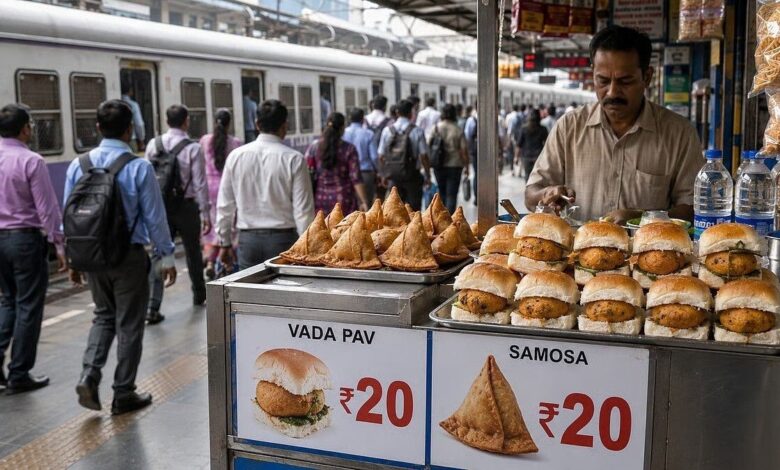
Passengers traveling through Central Railway stations will soon have to pay more for snacks and food items, with revised prices set to take effect from June 1.
Among the biggest changes, the popular vada pav will reportedly see its price increase from ₹13 to ₹20.
Multiple Food Items Expected to Become Costlier
The revised pricing is expected to affect several commonly purchased railway station food items including:
- Vada pav
- Tea
- Coffee
- Packaged snacks
- Breakfast items
- Ready-to-eat meals
Railway catering outlets across Central Railway stations are expected to implement the updated rates beginning next month.
Why Prices Are Increasing
The reported hike is believed to be linked to:
- Rising operational costs
- Inflationary pressures
- Increased raw material expenses
- Revised catering contracts
- Higher logistics and staffing costs
Food inflation and transportation costs have been impacting hospitality and catering services across India in recent months.
Vada Pav Price Jump Drawing Attention
The increase in vada pav pricing has especially attracted attention because the snack is considered one of the most affordable and widely consumed fast-food items among daily railway commuters.
The jump from ₹13 to ₹20 represents a significant increase for regular passengers who rely on low-cost station food during travel.
Commuters React Online
The development has triggered mixed reactions online.
Some users argued that:
- Rising food costs are unavoidable due to inflation
- Improved quality may justify higher prices
- Railway catering services require modernization
Others criticized the sharp increase, saying it may affect:
- Daily commuters
- Lower-income travelers
- Students
- Budget passengers
Railway Catering Under Increasing Pressure
Railway catering services have faced ongoing scrutiny over:
- Food quality
- Hygiene standards
- Pricing consistency
- Vendor management
Indian Railways has been attempting to modernize passenger services while balancing operational costs and customer expectations.
Inflation Impact Visible Across Sectors
The railway food price revision comes amid broader inflationary pressures affecting:
- Fuel prices
- Transportation
- Food services
- Consumer goods
- Hospitality sectors
Higher logistics and supply chain expenses have increasingly impacted everyday consumer pricing across the country.
Indian Railways Modernization Continuing
Indian Railways continues pursuing large-scale modernization initiatives involving:
- Station redevelopment
- Premium trains
- Digital ticketing
- Catering reforms
- Infrastructure upgrades
However, balancing modernization with affordability remains a major challenge given the enormous scale of India’s railway network and passenger base.
Passenger Costs Continue Rising
For millions of railway travelers, even small price revisions can significantly affect travel budgets over time.
As inflationary pressures continue across multiple sectors, passengers may increasingly face higher day-to-day travel expenses beyond ticket fares alone.