
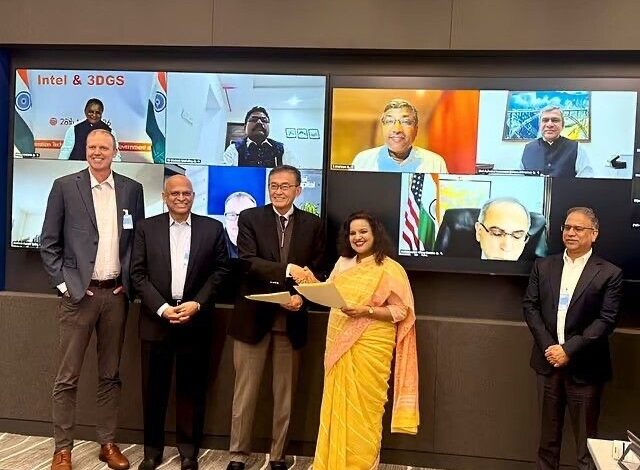
India has signed a major semiconductor investment project worth approximately $3.3 billion involving Intel and 3D Glass Solutions in Odisha.
The agreement represents another significant move in India’s rapidly expanding semiconductor ambitions as the country attempts to position itself as a major global electronics and chip manufacturing destination.
Semiconductor Push Accelerating in India
The project is expected to strengthen India’s efforts to build domestic capabilities across:
- Chip manufacturing
- Semiconductor packaging
- Electronics supply chains
- Advanced materials
- Technology infrastructure
India has aggressively expanded semiconductor incentives in recent years as governments worldwide race to secure strategic chip supply chains.
Odisha Emerging as Technology Investment Hub
The investment is also expected to boost Odisha’s growing position in advanced industrial and technology infrastructure development.
The state has increasingly attracted investment across sectors including:
- Electronics manufacturing
- Renewable energy
- Industrial infrastructure
- Advanced materials
- Data centers
Officials believe semiconductor investments could generate substantial long-term economic and employment benefits.
Global Semiconductor Race Intensifying
Semiconductors have become one of the world’s most strategically important industries because advanced chips are essential for:
- Artificial intelligence
- Smartphones
- Electric vehicles
- Defense systems
- Data centers
- Telecommunications infrastructure
Countries worldwide are investing heavily to reduce dependence on concentrated chip manufacturing regions.
India Seeking Supply Chain Diversification
India’s semiconductor expansion efforts are partly driven by broader global attempts to diversify supply chains away from excessive dependence on a small number of manufacturing hubs.
Geopolitical tensions and pandemic-era disruptions exposed vulnerabilities in global semiconductor production networks, pushing governments to prioritize domestic chip ecosystems.
India has launched multiple policy initiatives aimed at attracting:
- Global semiconductor firms
- Electronics manufacturers
- Advanced technology investments
Intel’s Expanding Strategic Role
Intel remains one of the most influential players in the global semiconductor industry and has been expanding partnerships and investments worldwide amid growing AI-driven chip demand.
The company continues competing in sectors involving:
- AI processors
- Foundry manufacturing
- Data center chips
- Advanced computing infrastructure
Partnerships involving Intel are often viewed as strategically significant due to the company’s global technology influence.
AI Boom Fueling Massive Chip Investments
The semiconductor industry is currently experiencing unprecedented global investment activity because of surging demand linked to:
- Artificial intelligence
- Cloud computing
- High-performance computing
- AI infrastructure expansion
Analysts say the AI revolution has transformed semiconductors into one of the most important geopolitical and economic sectors globally.
India Targeting Global Manufacturing Position
India has increasingly positioned semiconductor manufacturing as a central pillar of its long-term industrial and technological strategy.
The country aims to strengthen capabilities involving:
- Electronics exports
- High-tech manufacturing
- Supply chain resilience
- Domestic innovation ecosystems
Experts believe large-scale semiconductor projects could eventually help India expand its role in the global technology economy far beyond software and IT services.
Long-Term Strategic Importance
Industry observers say semiconductor investments are no longer viewed solely as industrial projects but as strategic national infrastructure.
The India-Intel-3DGS agreement highlights how competition for semiconductor leadership is becoming deeply tied to:
- Economic security
- Technological independence
- National competitiveness
- AI leadership
As global demand for advanced chips continues rising, semiconductor manufacturing capacity is expected to remain one of the world’s most fiercely contested industries over the coming decade.