
OpenAI Lowers Its $1.4 Trillion Valuation Target
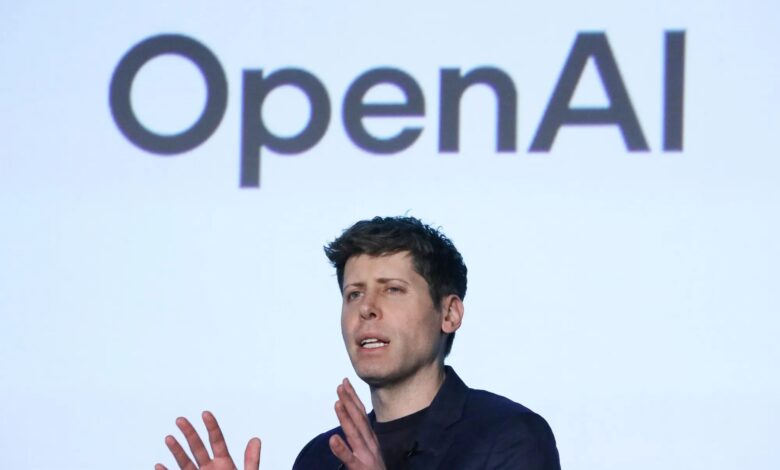
OpenAI has reportedly reduced its target valuation for a new funding round to $1.25 trillion from $1.4 trillion, following weaker-than-expected investor demand, according to the Financial Times. The adjustment comes as the ChatGPT maker seeks to raise approximately $30 billion in fresh capital.
The fundraising discussions remain ongoing, and the final terms could change. Bloomberg also reported the revised valuation target, citing people familiar with the negotiations. (Financial Times)
Despite the reduction, a $1.25 trillion valuation would still represent a substantial increase over the company’s reported $852 billion valuation following its March 2026 funding round.
Why Are Investors Becoming More Cautious?
The shift comes amid growing scrutiny of the enormous costs associated with developing and operating advanced artificial intelligence systems.
AI companies are committing vast sums to data centres, advanced chips, cloud computing infrastructure and energy capacity. Investors increasingly want evidence that these investments can generate sustainable revenue and profits rather than simply drive user growth.
A broader sell-off in US technology stocks has also contributed to uncertainty about whether current AI valuations adequately reflect the risks and costs involved. Reports indicate that some investors are experiencing funding fatigue after several exceptionally large fundraising rounds across the AI industry. (Financial Times)
The reduced target does not necessarily mean investors have lost confidence in OpenAI’s technology. Instead, it suggests that securing capital at increasingly ambitious valuations may be becoming more difficult.
OpenAI Is Seeking $30 Billion Before a Potential IPO
OpenAI reportedly intends to use the new funding round as a financial bridge toward a potential initial public offering in the first half of 2027.
The company is working to secure commitments from investors, with reports indicating that the process could be finalised around the end of October. However, OpenAI may raise less than its targeted $30 billion if demand falls short. (Bloomberg Law)
Coatue Management and investment funds from the United Arab Emirates have reportedly been in discussions about participating in or helping lead the round. The final investor lineup and funding amount have not been confirmed publicly. (Bloomberg Law)
A successful fundraising round would provide OpenAI with additional capital to support its infrastructure commitments, product development and competition with other leading AI companies.
Anthropic’s IPO Could Influence Investor Decisions
Competition within the AI industry is also shaping investment decisions.
Investors are closely watching Anthropic, the company behind Claude, as it prepares for a potential public listing. Some prospective OpenAI investors reportedly prefer to see how the market values Anthropic before committing additional capital to its rival.
The pricing and reception of a major AI IPO could provide investors with a fresh benchmark for assessing the industry’s growth prospects, financial risks and long-term profitability. (Yahoo Finance)
This creates a more complicated fundraising environment for OpenAI. Even companies with strong products and rapid revenue growth must compete for investor capital against alternative opportunities in the same sector.
What the Lower Valuation Means for the AI Industry
OpenAI’s revised target highlights a potential turning point in the AI investment boom. For years, expectations surrounding generative AI have encouraged investors to commit extraordinary sums to companies developing increasingly powerful models.
Now, attention is shifting toward the economics behind that growth: infrastructure costs, financing requirements, revenue generation and the time needed to achieve sustainable returns.
A lower valuation target is not, by itself, proof that the AI industry is in decline. OpenAI would still be seeking a valuation above $1 trillion, reflecting the enormous expectations surrounding its technology and commercial potential.
However, the reported adjustment suggests that investor enthusiasm alone may no longer be enough to secure funding at every price. As AI companies prepare for possible public listings, investors may increasingly demand clearer evidence that massive infrastructure investments can translate into lasting financial returns.
The Bottom Line
OpenAI’s reported reduction of its valuation target from $1.4 trillion to $1.25 trillion marks an important development in the financing of the AI industry. The company continues to pursue a major capital raise, but the reported cooling in investor demand underscores the growing pressure to justify the costs of the AI boom.
The outcome of the funding round, alongside the market’s response to rival AI companies, could help determine how investors value the next phase of artificial intelligence development.