Trump Vows to Ban ‘Artificial Intelligence’ Term, Wants Government to Use ‘Super Intelligence’

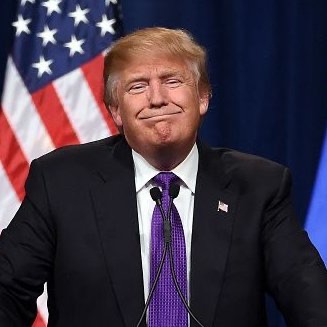
Trump Escalates Push to Rename Artificial Intelligence
US President Donald Trump has renewed his campaign to replace the term “Artificial Intelligence” with “Super Intelligence,” saying his administration will ban the existing terminology in relevant documents and other materials.
In a post on Truth Social on October 27, Trump criticised The Wall Street Journal for continuing to use the abbreviation AI. He described the term as inaccurate and argued that “Super Intelligence,” abbreviated as SI, better reflects the capabilities of modern AI systems.
Trump said the change would take effect “in short order,” but did not provide details about the scope or enforcement of the proposed broader restriction.
Executive Order Already Directs Federal Agencies to Use SI
The latest statement follows an executive order Trump signed on September 29, 2026, titled Inaugurating the Era of Super Intelligence.
The order directs executive departments and agencies, to the maximum extent permitted by law, to use “Super Intelligence” and “SI” instead of “Artificial Intelligence” and “AI” in official correspondence, public communications, websites, reports, policy documents and other non-statutory documents.
It does not require the government to revise previously issued regulations, presidential actions, contracts, grants or historical documents. The order also calls for proposed legislative language to establish a federal definition of “Super Intelligence.”
The Justice Department has already instructed employees to use the preferred terminology in most circumstances, including certain court filings where appropriate, according to Reuters reporting published in October.
Can Trump Ban the Term Across the Entire Country?
The distinction between changing government terminology and banning a phrase everywhere is significant.
The executive order applies to the federal executive branch, subject to applicable law. It does not automatically require private companies, journalists, universities, state governments or ordinary citizens to stop using the term AI.
Trump’s latest statement suggests a broader ambition, but the administration has not publicly clarified how such a sweeping restriction would work. The scope of any new measures—and whether they could legally extend beyond federal government communications—remains uncertain.
Why ‘Artificial Intelligence’ and ‘Super Intelligence’ Are Not the Same
The terminology also raises a scientific distinction.
Artificial intelligence is the established umbrella term for computer systems capable of tasks associated with human intelligence, including language processing, pattern recognition, reasoning and decision-making.
Superintelligence generally refers to intelligence that exceeds human capabilities across multiple domains. It describes a much narrower and more ambitious concept than AI as a whole.
Many existing AI systems perform specific tasks effectively without demonstrating intelligence that surpasses humans across all or most areas. As a result, treating the two terms as interchangeable could blur an important distinction in technology research.
The change is therefore more than a simple rebranding exercise: it involves adopting a term with a different technical meaning.
A Political Rebranding of America’s AI Strategy
The Trump administration has presented the terminology change as a way to emphasise the growing capabilities and economic potential of advanced AI systems.
However, the term “artificial intelligence” has been used for decades and remains the standard terminology across scientific research, business and technology policy. The White House itself used the term in its 2025 AI Action Plan before the September 2026 executive order promoted SI as the preferred replacement.
The latest announcement also comes amid continuing debate over AI safety, regulation, infrastructure spending and the technology’s impact on employment and society.
Changing the language used in official documents will not, by itself, change how these systems function or establish that they possess superhuman intelligence.
What Happens Next?
The immediate question is how the administration intends to implement Trump’s latest statement beyond the existing executive order.
Federal agencies have already been directed to adopt the new terminology in many official communications, but the president has not explained whether the latest announcement will lead to additional executive action or legislative proposals.
For businesses, researchers and media organisations, the established term AI is likely to remain widely used unless further measures change the legal or administrative landscape.
For now, Trump’s latest remarks signal an effort to broaden an existing federal terminology policy—not a confirmed nationwide prohibition on the words “Artificial Intelligence.”